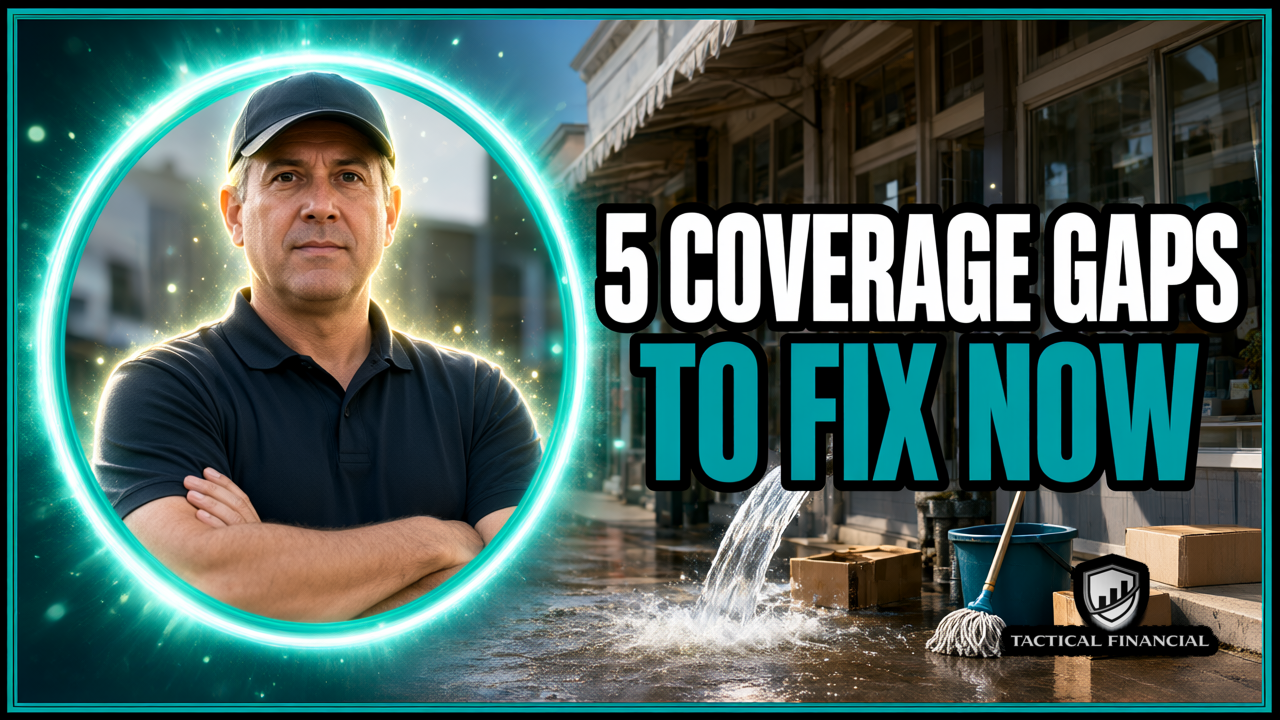
A pipe bursts in your Freeport storefront on a Sunday morning. You call your insurance agent Monday, expecting the cleanup and lost sales to be covered. Then you find out your policy caps water damage at $10,000 and doesn't touch the $18,000 in revenue you lost while the shop was closed. That gap isn't bad luck. It's a missing endorsement. For small businesses in Freeport, Illinois, the most expensive insurance problems in 2026 aren't the ones you can see. They're the ones hiding in the fine print of a policy that looked fine when you bought it.
Why Freeport Small Businesses Face Unique Insurance Risks in 2026
Freeport isn't Rockford, and it isn't Chicago. The business community here runs on manufacturers, agricultural suppliers, downtown retail, and a growing number of home-based service companies. That mix creates a specific set of exposures that a generic business owner's policy (BOP) often misses.
Add in the local climate and the numbers get real fast. Stephenson County sees roughly 36 inches of snow and ice annually, and the freeze-thaw cycle from December through March is brutal on pipes, roofs, and parking lots. A single frozen pipe event in a 2,500 square foot commercial building can run $8,000 to $25,000 in water remediation alone, before you count the inventory or the days you couldn't open. Meanwhile, the Illinois Small Business Development Center reports that roughly 40% of small businesses never reopen after a major disaster, often because their coverage didn't address the real cost of downtime.
The bigger issue is that most Freeport business owners buy insurance the same way they buy a truck: find the cheapest one that runs. That works until it doesn't. Here are the five gaps that show up most often when we review commercial policies for businesses in Freeport, Rockford, and the surrounding communities.

Gap 1: Business Interruption Coverage for Local Supply Chain Disruptions
Business interruption coverage replaces lost income when a covered event forces you to close or slow down. The problem is that most policies only trigger when your building is damaged. If your main supplier in Rockford gets flooded and can't ship parts for six weeks, your policy likely pays nothing.
That's a supply chain gap, and it's more common than people think. A machine shop in Freeport that relies on a single casting supplier could lose $50,000 to $150,000 in revenue during a six week outage. The fix is a contingent business interruption endorsement, which extends coverage to losses caused by damage at a key supplier's location. It typically adds 10% to 20% to your premium, but it's the difference between surviving a disruption and closing the doors.
Here's the practical step: list your top three suppliers and your top three customers. Ask your agent whether your policy responds if any of those six businesses suffer a physical loss. If the answer is no, you've found your first gap.
Gap 2: Cyber Liability for Freeport Businesses Without Dedicated IT
Most Freeport small businesses don't have an IT department. They have a bookkeeper who knows the accounting software and an owner who resets the router when the internet goes down. That's exactly the profile cybercriminals target, because there's no one watching the network.
The numbers are sobering. The FBI's Internet Crime Complaint Center logged $16.6 billion in reported cybercrime losses in 2024, and small businesses with fewer than 50 employees are hit disproportionately hard. A single business email compromise, where a scammer impersonates a vendor and redirects a wire transfer, can cost $25,000 to $75,000 before anyone notices. Ransomware attacks on small manufacturers in northern Illinois have become common enough that several carriers now ask specific questions about backup procedures during underwriting.
Standalone cyber liability coverage typically runs $500 to $2,500 per year for a small business, depending on revenue and the amount of sensitive data you hold. It covers breach notification, legal defense, and often the cost of restoring lost data. If you process customer credit cards, store employee Social Security numbers, or use cloud accounting software, this gap belongs on your list. And if you're a one person consulting shop with no customer data and no payment processing, you may reasonably skip it. That's the honest answer most agents won't give you.

Gap 3: Workers' Comp for Seasonal and Part-Time Employees
Illinois requires workers' compensation coverage for almost every employer, including part time and seasonal workers. The mistake Freeport business owners make is assuming that a landscaper who works 15 hours a week or a college student who helps out during the holiday rush doesn't count. They do.
The Illinois Workers' Compensation Commission takes an aggressive view of employee classification, and a single uninsured injury can trigger penalties of $500 per day per uninsured employee, up to $10,000, plus the cost of the claim itself. A back injury from lifting at a warehouse or a slip on ice in a retail parking lot can easily exceed $40,000 in medical costs and lost wages.
If you use seasonal staff, make sure your policy includes a per project or seasonal employee endorsement and that your payroll estimates reflect reality. Underreporting payroll to save premium is one of the fastest ways to get a claim denied and your policy cancelled. Bring your actual payroll records, including 1099 contractors you treat like employees, to your next review. If the IRS would call them employees, the workers' comp auditor will too.
Gap 4: Commercial Auto for Delivery and Service Vehicles
This is the gap that quietly costs Freeport business owners the most money. A personal auto policy excludes vehicles used for business, and it excludes delivery driving entirely. If your employee drives a company truck to a job site in Rockford or uses their own car to make deliveries around town, a personal policy won't respond to a claim.
Commercial auto coverage in the Freeport area typically runs $1,200 to $3,500 per vehicle per year for a small fleet, depending on the vehicle type and driving records. For businesses that use employee owned vehicles, a hired and non-owned auto endorsement on the commercial policy fills the gap for $150 to $400 annually. That endorsement is one of the best values in commercial insurance, and it's also one of the most frequently omitted.
Watch for two red flags. First, if your agent never asked whether you or your employees drive for work, your policy probably doesn't cover it. Second, if your delivery drivers use their own cars and you don't have hired and non-owned coverage, a single at fault accident could leave your business paying out of pocket for injuries and vehicle damage.
Gap 5: Key Person Life Insurance for Owner-Dependent Businesses
Many Freeport businesses are built around one person. The owner holds the customer relationships, the supplier contracts, and the institutional knowledge. If that person dies unexpectedly, the business often dies with them, and the surviving family gets stuck trying to sell a company that can't function without its founder.
Key person life insurance solves a specific problem: it gives the business cash to cover lost revenue, recruit a replacement, and pay off debts during the transition. Policies are typically sized at five to ten times the key person's annual compensation, and a $500,000 term policy for a healthy 45 year old business owner often costs $50 to $100 per month. That's less than most owners spend on coffee and fuel in a month.
This coverage also pairs naturally with Business Continuation Planning, which Tactical Financial specializes in. The policy funds a buy-sell agreement so surviving partners or family members can transfer ownership cleanly instead of fighting over it. If you're the only owner and no one else depends on the business for income, you may not need key person coverage. But if employees, partners, or family rely on the business, this gap deserves a serious look before your next renewal.
How to Review Your Freeport Business Insurance Policy Before Renewal
You don't need a 40 page audit to find most of these gaps. You need an hour, a copy of your policy, and a list of honest questions. Here's the process we walk Freeport business owners through before every renewal.
- Pull your declarations page and find the exclusions section. The declarations page tells you what you bought. The exclusions tell you what you didn't. Read the exclusions first.
- List your top three suppliers and top three customers. Ask whether your policy covers lost income if any of them suffer a physical loss. If not, ask about contingent business interruption.
- Count everyone who works for you, including part time, seasonal, and regular 1099 contractors. Confirm they're covered under workers' comp at the correct payroll level.
- List every vehicle used for business, owned or personal. Confirm commercial auto coverage and hired and non-owned auto coverage are both in place.
- Ask what happens to the business if you die. If the answer involves a fire sale, ask about key person life insurance and a buy-sell agreement.
- Ask about cyber liability, even if you think you're too small to be a target. Small businesses are the most common target because they're the easiest.
One more piece of insider advice: ask your agent whether they represent multiple carriers or just one. Tactical Financial is an independent agency, which means we compare policies from multiple top rated providers instead of pushing a single company's product. That matters when you're trying to close a specific gap without overpaying for coverage you don't need.
Frequently Asked Questions
How much does small business insurance cost in Freeport, IL?
Most Freeport small businesses pay $600 to $2,500 per year for a basic business owner's policy, depending on revenue, building value, and industry. Adding endorsements for business interruption, cyber liability, or commercial auto pushes that range higher, but the added coverage is usually far cheaper than paying for a single uncovered claim out of pocket.
Do I need workers' comp if I only have part time employees in Illinois?
Yes. Illinois requires workers' compensation coverage for nearly all employers, including those with part time and seasonal workers. The only common exception is a sole proprietor with no employees, and even that has limits. If you're unsure, ask your agent to review your payroll classification before your next audit.
What is the difference between general liability and business interruption coverage?
General liability pays for third party claims, like a customer getting injured in your store or a vendor suing over a contract dispute. Business interruption pays for your own lost income when a covered event forces you to close. They solve different problems, and most policies need both.
Can I combine my business and personal insurance with one agency?
Yes. Many Freeport business owners bundle commercial coverage with personal auto, home, or life insurance through the same independent agency. Bundling can lower your overall premium and simplifies the renewal process, since one agent sees the full picture of your risks.
If you're a Freeport business owner and any of these five gaps sound familiar, don't wait for a claim to find out what your policy doesn't cover. Tactical Financial works with businesses across Freeport, Rockford, Belvidere, and the surrounding communities to review coverage, close gaps, and build a plan that actually fits. Josh Dockins and the team have spent more than a decade helping owners protect what they've built. Call them, bring your declarations page, and ask the hard questions. They'll tell you straight up what you need, and what you don't.