A machine shop on Rockford's west side carries a general liability policy that would cover a customer slipping in its lobby. What it won't cover is the $180,000 product liability claim that lands when a faulty spindle from that shop fails inside a customer's $2 million CNC line. That gap is the single most common coverage mistake small and mid-size businesses make in the Rockford area, and it usually stays invisible until the day it matters. Shopping for Business Insurance in Rockford means matching coverage to how your industry actually makes money and actually gets sued, not buying the cheapest generic policy an online portal will spit out.
General liability is the floor, not the building. It covers third-party bodily injury and property damage, and that's about where the good news ends. It doesn't cover your own equipment breaking down, your employees getting hurt, your professional advice going wrong, or a subcontractor's mistake landing on your books. Below are the five industries around Rockford, Belvidere, and DeKalb where those gaps bite hardest, plus the specific coverage each one actually needs in 2026.
Why General Liability Isn't Enough for Rockford's Niche Industries
Walk into any commercial insurance quote in the Rockford area and you'll see a base general liability policy priced somewhere between $500 and $2,500 a year for most small operations. That price is real, and it's also misleading. The policy is cheap because it covers a narrow slice of risk. The moment your business touches heavy equipment, patient records, tools on a jobsite, or alcohol sales, the base policy stops being adequate and starts being a false sense of security.
Illinois adds its own layer. The state requires workers' compensation coverage for nearly all employers, and the Illinois Workers' Compensation Commission has been steadily raising the cost of claims involving heavy machinery and repetitive strain. Rockford's manufacturing base means those claims are common here. Meanwhile, Winnebago, Boone, and DeKalb counties all carry a mix of older industrial buildings and newer retail strips, and the property values and construction styles differ enough that a policy written for one address may be badly mismatched at another.
The practical rule: if your business has employees, owns equipment over $50,000, gives professional advice, or serves alcohol, a standalone general liability policy is not enough. The five industries below are where that rule shows up most often.
Manufacturing & Machining: Equipment Breakdown and Product Liability Risks
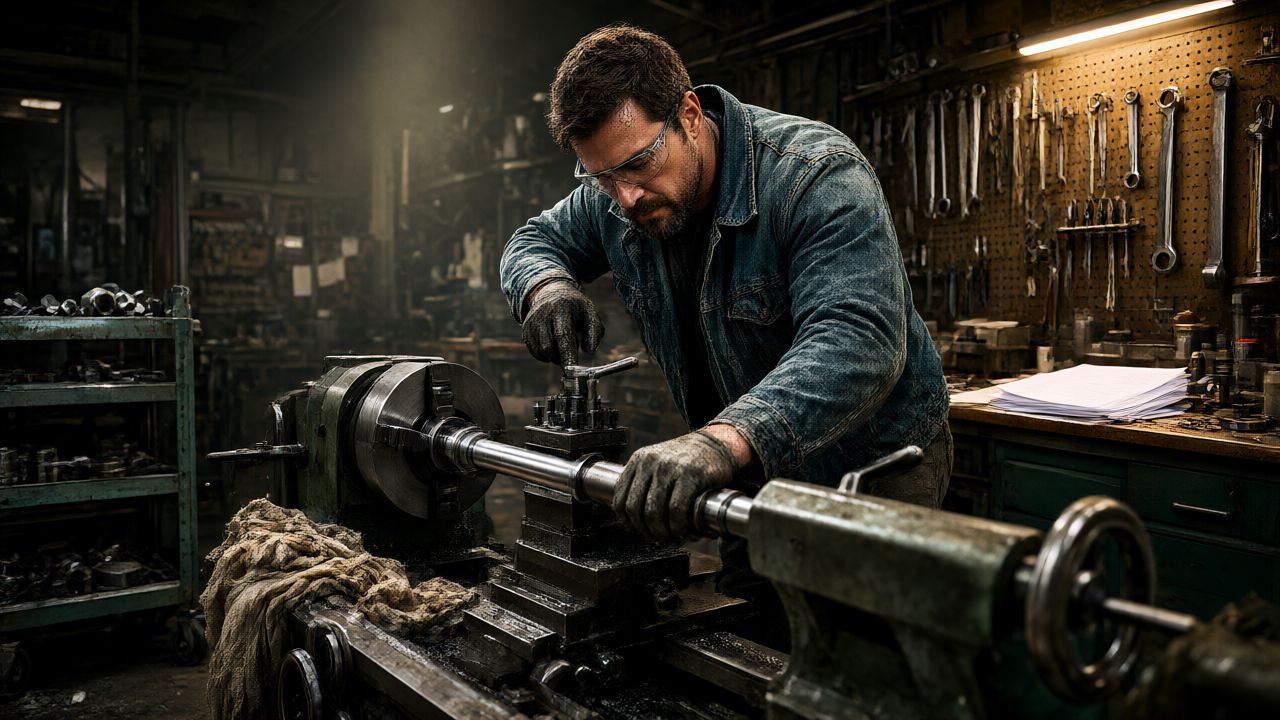
Rockford has one of the densest concentrations of precision machining, tool and die, and aerospace supplier shops in the Midwest. That's a strength, and it's also a specific insurance problem. A single CNC machine can run $150,000 to $500,000, and when it goes down, the business doesn't just lose the machine. It loses production days, misses delivery deadlines, and pays overtime to catch up. General liability covers none of that.
Equipment breakdown coverage is the missing piece. It pays for the cost to repair or replace machinery damaged by a mechanical or electrical failure, and it can include business interruption coverage for the lost production time. For a shop running three shifts, a $250,000 machine down for two weeks can mean $40,000 to $80,000 in lost revenue on top of the repair bill. The coverage typically adds a few hundred to a few thousand dollars a year depending on equipment value, which is a small price against that exposure.
Product liability is the second gap. If a part your shop manufactured fails inside a customer's product and causes injury or damage, the claim can run into six figures, and it can come years after the part shipped. Illinois follows a modified comparative fault rule, meaning a plaintiff can recover damages even if partly at fault, as long as they're less than 51% responsible. That makes defense costs real even in cases you'd expect to win. A shop that supplies components into any larger assembly needs product liability limits that reflect the value of the end product, not just the value of the part.
Healthcare & Medical Offices: Professional Liability and HIPAA Compliance
A medical office in Rockford, Belvidere, or DeKalb faces a coverage problem most business owners never think about: the thing most likely to get them sued isn't the building, it's the advice. Professional liability, sometimes called medical malpractice insurance for clinical practices, covers claims that a patient was harmed by a provider's error or omission. General liability specifically excludes that. A practice that carries only a general policy is naked on its single largest risk.
HIPAA adds a second layer that has gotten more expensive. A breach involving patient records can trigger federal fines, notification costs, legal fees, and reputational damage. Cyber liability coverage designed for healthcare pays for breach response, forensics, and regulatory defense. Small practices often skip it because the quote feels high, but a single lost laptop with unencrypted records can cost $50,000 to $250,000 in response costs before any fine. For a practice with 10 or fewer providers, a cyber policy often runs $1,500 to $5,000 a year, which is far less than a single breach.
One honest note for smaller practices: if you're a solo provider working out of a shared space and carrying your own malpractice through a hospital or network, you may not need a standalone business policy yet. Ask your malpractice carrier what it already covers. If it includes general liability and cyber, you may be duplicating coverage. If it doesn't, that's the gap to close first.
Construction & Contracting: Tool Theft, Jobsite Injuries, and Subcontractor Risks
Construction is the industry where a generic policy fails most spectacularly. Three distinct risks sit outside general liability, and each one has a track record in the Rockford area.
- Tool and equipment theft. A loaded work truck or trailer is a target, and Rockford's mix of urban and rural jobsites means equipment sits unattended in parking lots and driveways overnight. A stolen trailer with $25,000 in tools is a common claim. General liability doesn't cover your own tools; you need inland marine or a tool floater.
- Jobsite injuries to employees. Illinois requires workers' comp, and the cost per claim for a fall or crush injury on a construction site can run $40,000 to $150,000. Getting the classification codes right matters, because a roofer misclassified as a general laborer can trigger a premium audit and a big back charge.
- Subcontractor liability. If a sub you hired damages property or injures someone, the claim can come back to you as the general contractor. You need to require certificates of insurance from every sub and confirm they name you as an additional insured. A sub without coverage is your liability.
The practical checklist for a Rockford contractor: get a certificate of insurance from every subcontractor before they set foot on the job, confirm the policy is current (call the carrier, don't just read the PDF), and make sure your own policy includes completed operations coverage, which covers claims arising after you've finished the job.
Retail & Hospitality: Liquor Liability, Food Spoilage, and Customer Slip-and-Falls
A restaurant or bar in downtown Rockford or along the Belvidere corridor carries risks that a general liability policy handles only partly. The three biggest gaps:
Liquor liability. Illinois dram shop law holds a business that serves alcohol liable for injuries caused by an intoxicated patron, and the state has no cap on damages in these cases. If you serve alcohol, you need a separate liquor liability policy. General liability excludes it entirely. For a bar with moderate sales, liquor liability often runs $2,000 to $8,000 a year depending on hours, security, and claims history.
Food spoilage. A power outage or equipment failure that ruins a walk-in cooler of inventory is a real loss for a restaurant. Spoilage coverage, usually added to a property policy, pays for the lost inventory and can include business income lost during the closure. A single event can wipe out $5,000 to $20,000 in product.
Customer slip and falls. These are the most common retail and hospitality claims, and they're where documentation matters most. A well-kept incident log, security camera footage, and a written cleaning schedule can be the difference between a paid claim and a defended one. Review your general liability limits; $1 million per occurrence is the common floor, and many Rockford-area businesses carrying higher foot traffic move to $2 million.
How to Get Industry-Specific Coverage in Rockford, Belvidere, and DeKalb
Here's the part most articles skip: how to actually buy the right policy without overpaying. The process is straightforward if you know what to prepare.
- Gather your numbers. Annual revenue, payroll by employee classification, equipment values (with purchase dates), property values, and any professional certifications your team holds. A carrier will ask for all of it.
- Document your operations. What you make, who you serve, whether you subcontract, whether you serve alcohol, and whether you handle client data. Each answer changes the quote.
- Ask for a coverage gap review, not just a price. The right question is not "what's the cheapest policy" but "what does this policy exclude, and what would that cost me if it happened?"
- Compare at least three carriers. An independent agency can do this in one pass. Tactical Financial works with multiple top rated carriers, which means you see real options rather than one company's menu.
- Review annually. Equipment values change, payroll grows, and new risks appear. A policy written in 2023 may be badly out of date in 2026.
When you don't need a professional: if you're a solo consultant working from home with no employees, no inventory, and no client site visits, a simple general liability policy plus a cyber endorsement may be all you need, and an online quote is fine. The moment you add employees, equipment, or physical premises, the math changes.
If you're in Rockford, Belvidere, DeKalb, Freeport, Harvard, Loves Park, Machesney Park, or Sycamore and your business touches one of these five industries, Tactical Financial handles exactly this kind of coverage review. Josh Dockins and the team have spent more than a decade writing business insurance for local companies, and they'll tell you straight up whether your current policy has a gap worth closing. Start with a business risk assessment, and you'll know within an hour whether you're covered or exposed.
Frequently Asked Questions
How much does business insurance cost for a small business in Rockford?
Most small businesses in the Rockford area pay between $1,200 and $4,500 a year for a basic package combining general liability and property coverage. The number moves based on payroll, revenue, equipment values, and industry. A machine shop with $500,000 in equipment will land higher than a home-based consultant.
Do I need a separate policy for liquor liability in Illinois?
Yes. General liability excludes alcohol-related claims, and Illinois dram shop law can hold your business liable for injuries caused by an intoxicated patron with no cap on damages. A separate liquor liability policy is required if you serve alcohol.
What should I look for when choosing a business insurance agency in Rockford?
Look for an independent agency that represents multiple carriers, asks about your operations before quoting, and offers an annual coverage review. Ask whether they'll provide certificates of insurance for your subcontractors and whether they handle claims locally. A single-carrier agent can't shop your policy, and an online portal won't catch industry-specific gaps.
Does workers' compensation cover subcontractors in Illinois?
Not automatically. If a subcontractor is injured on your jobsite, the claim can come back to you, especially if the sub lacks their own coverage. Require a certificate of insurance from every sub and confirm you're named as an additional insured on their policy.
If your Rockford-area business has grown since your last policy review, the coverage you bought three years ago may not match the operation you run today. Tactical Financial will walk through your actual risks and tell you what's missing, even if the answer is that you're already covered. Call them for a straight answer before the next claim finds the gap for you.